
loader image

School Of Medical Lab

Courses

Medical Laboratory Sciences Program

Given that the field of Medical Laboratory Sciences is primarily concerned with the study of methods used for disease detection, diagnosis, treatment, and proper follow-up, the policy of Sub-Saharan University College is built on integrating basic and clinical sciences while linking them to the local, regional, and international community.

The program is designed to prepare students to become critical thinkers capable of working independently or within a team, while relying on continuous learning and self-development. It aims to equip students with the scientific and practical qualifications necessary to perform laboratory investigations, analyze results, and interpret findings effectively.

The program covers both theoretical and practical aspects across all areas of specialization. In the final year, students undergo intensive clinical training in a number of national hospitals as part of their academic requirements, enhancing their theoretical knowledge and refining their practical skills.

This program qualifies graduates to work in laboratory fields in both the public and private sectors.

Vision

Excellence in laboratory education, training, and research directed toward improving laboratory services that serve patients and society at the local, regional, and international levels.

Mission

To provide excellence in undergraduate and postgraduate education by preparing skilled laboratory professionals through innovative learning, ethical practice, scientific research, community engagement, and the effective use of information technology.

Strategic Plan

Medical Laboratory Sciences

Bachelor of Science (Honours) in Medical Laboratory Sciences

Sub-Saharan University College, in collaboration with the College Scientific Council, awards the Bachelor of Science (Honours) in Medical Laboratory Sciences (B.Sc. Hons). This premium path applies to students who achieve a cumulative GPA of 2.00 or higher upon successful completion of the required curriculum.

Community Responsibility

The program is committed to promoting public health awareness through health days, seminars, workshops, and outreach activities aimed at preventing and early detection of communicable and non-communicable diseases.

Degree Awarded

Academic Degree

Required Benchmark GPA ≥ 2.00

Granted upon successful compliance with all program modules, practical benchmarks, and quality management systems in medical laboratory education.

Academic Divisions

College Departments & Specializations

The B.Sc. Honours degree is awarded across five core specialized healthcare divisions, representing the clinical pillars of the program:

Hematology & Immunohematology

Study of blood components, hematological disorders, and blood banking methodologies.

Clinical Chemistry

Analysis of bodily fluids using advanced biochemical techniques and monitoring solutions.

Medical Microbiology

Identification and pathological investigation of infectious pathogenetic microorganisms.

Histopathology & Cytopathology

Microscopic examination of tissue structures and cellular changes for disease diagnosis.

Medical Parasitology & Entomology

Exploration of parasitic infections, vectors, and public health impact profiles.

Institutional Goals

Program Objectives

We emphasize establishing the Medical Laboratory Sciences Program with clear directives to train students, develop skilled laboratory professionals, and support local community healthcare initiatives:
Labor Market Supply Provide highly qualified laboratory specialists with strong competence.
Postgraduate Foundations Equip students with skills necessary to pursue advanced medical studies.
Curriculum Optimization Continuously improve, update, and align content with future scientific shifts.
Healthcare Development Contribute to the advancement of medical laboratory services in Sudan.
Quality Management Strengthen quality management systems, encourage innovative scientific research, and upgrade administrative competencies.
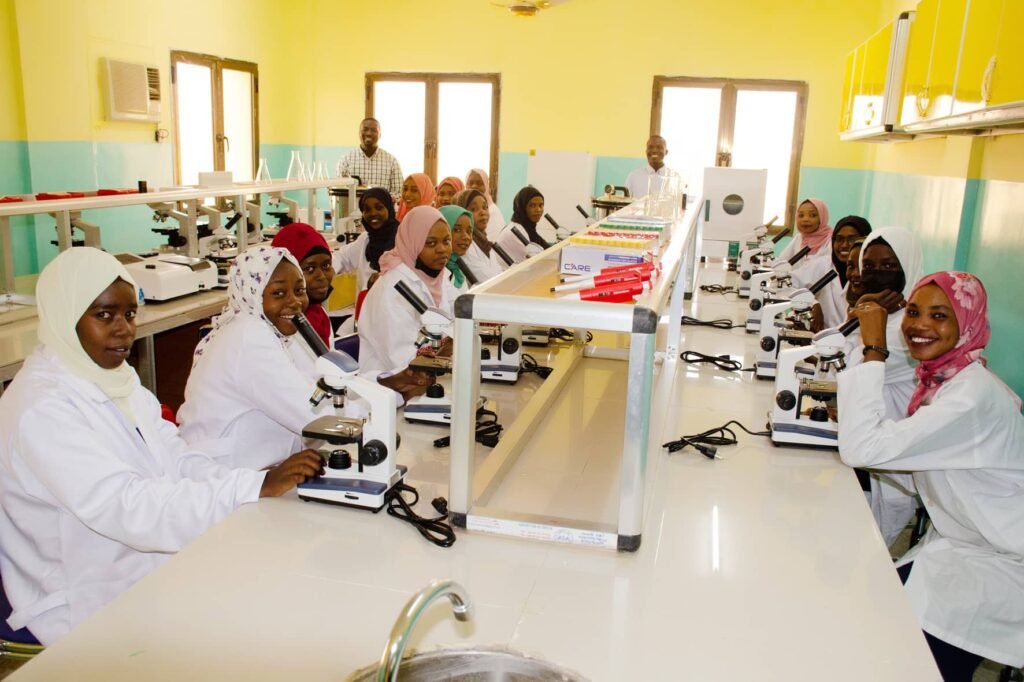
SUC Medical Laboratory Facilities
Quality Control Standards Standard Operating Procedures (SOPs) execution hubs
Attributes

Cognitive & Behavioral Skills

  • Adhere to strict professional ethics when dealing with patients and teams.
  • Work professionally within multidisciplinary healthcare teams.
  • Apply critical scientific thinking and use evidence-based approaches.
  • Continuously develop professionally through active training and research.
Competencies

Professional & Technical Skills

  • Apply biosafety and medical laboratory safety procedures effectively.
  • Collect, handle, process, and analyze appropriate biological samples correctly.
  • Operate medical equipment according to Standard Operating Procedures (SOPs).
  • Implement quality control and assurance protocols across all stages.
Sub-Saharan University College
Chat with us
Typically replies within minutes
WhatsApp+974 7058 1000
AvailableSun - Thu, 8am - 5pm
LocationKhartoum, Sudan
Start a conversation
Contact usWhatsApp