


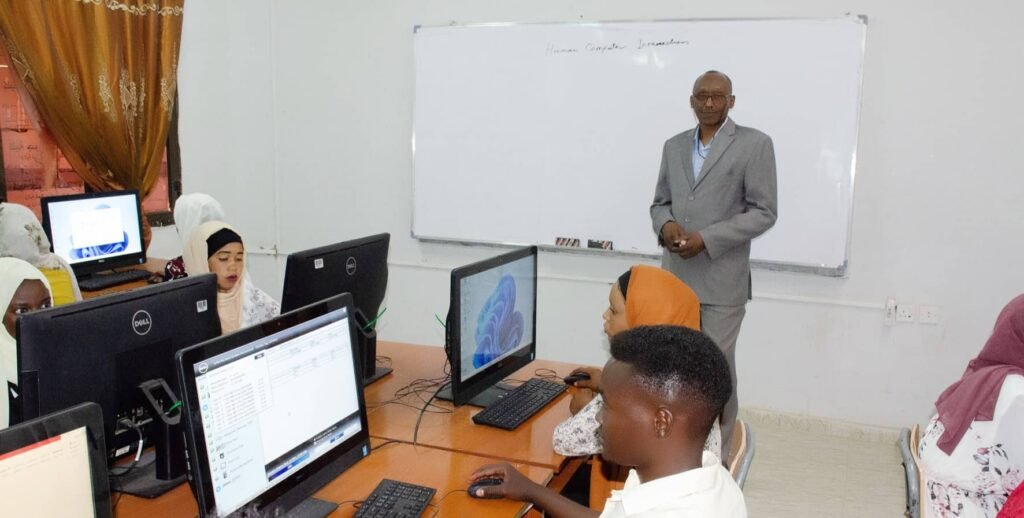

Computer Networking
Systems
This program prepares graduates to meet the growing global demand for skilled networking professionals across government institutions, private enterprises, telecommunications companies, financial organizations, and international agencies.
Program Credit Hours
Distributed across core courses, specialization requirements, laboratory sessions, and elective modules, in addition to practical training components.
Program Objectives
The Bachelor of Science in Computer Networking Systems targets core competencies to build elite technology infrastructure leaders:
Academic Foundation
Provide students with a strong academic and technical foundation in computer networking and systems administration.
Infrastructure Engineering
Develop highly skilled graduates capable of designing, implementing, and managing secure and scalable network infrastructures.
Industry Benchmarks
Equip students with practical competencies aligned with international networking standards and industry best practices.
Diagnostic Analytics
Strengthen analytical and problem-solving skills for diagnosing and resolving network-related issues.
Modern Tech Fluency
Promote understanding of modern networking technologies, including cloud computing and enterprise systems.
Team Synergy
Enhance students’ ability to work effectively in team-based and professional IT environments.
Continuous Innovation
Foster innovation, continuous learning, and professional development in the field of information technology.
Research Preparation
Prepare graduates for advanced studies and research in networking and related disciplines.
Learning Outcomes
Upon successful completion of the program, graduates will possess comprehensive operational capabilities across technical infrastructure paths:

Career Opportunities
Graduates of this program are qualified to assume operations and engineering seats within a wide array of industrial IT verticals:
Network Administrator
Govern systemic directory services, data policies, user permissions, and enterprise resource accesses.
Network Engineer
Design, build, optimize, and route high-availability corporate structural systems and data fabrics.
Systems Administrator
Oversee datacenter setups, multi-format server environments, and core virtualization boundaries.
IT Infrastructure Specialist
Align multi-tier hardware architectures, deployment schemas, and enterprise infrastructure pipelines.
Network Security Analyst
Mitigate threat vectors, deploy deep encryption keys, and protect organizational asset boundaries.
Technical Support Engineer
Resolve runtime environment issues, maintain systems diagnostics, and minimize corporate hardware downtimes.
Telecommunications Specialist
Manage raw data pipelines, structural telecom routing fields, and industrial broadcasting systems.
Cloud & NetOps Technician
Govern programmatic container instances, microservices clustering, and active deployment fields.